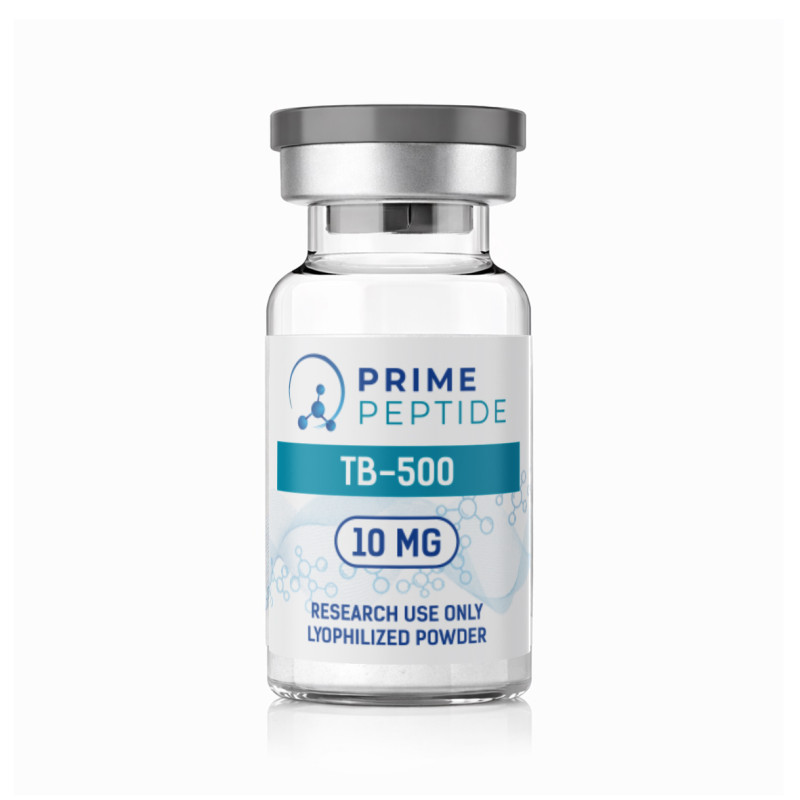
TB-500 (Thymosin Beta-4) 10mg
This offer ends in:
TB-500 is a synthetic peptide derived from Thymosin Beta-4, which supports tissue regeneration, reduces inflammation and stimulates the formation of new blood vessels. The peptide is actively studied for applications related to the recovery of muscles, tendons and other tissues.
What is TB-500 (Thymosin Beta-4)?
TB-500 is a synthetic peptide that represents an active fragment of the natural protein Thymosin Beta-4 (Tβ4) – a molecule present in almost all tissues of the human body and that plays a key role in the processes of recovery and regeneration.
What makes TB-500 different from many other peptides is its ability to act systemically rather than only locally. After application, it is distributed across different tissues and supports recovery processes where they are needed.
Its main mechanism is associated with:
- stimulating cellular migration (movement of cells to the damaged area)
- activating angiogenesis (formation of new blood vessels)
- accelerating the recovery processes in muscles, tendons and connective tissue
In essence, TB-500 “unlocks” the body’s internal recovery mechanisms, which makes it extremely interesting in the context of sports injuries, overloading and regeneration.
What are the benefits of TB-500 (Thymosin Beta-4)?
Accelerated tissue recovery
TB-500 supports the movement and activity of the cells involved in recovery, which leads to faster regeneration of damaged structures.
Improved healing of muscles, tendons and ligaments
The peptide supports more effective recovery of connective tissue – something that is typically repaired slowly and with difficulty.
Reduced inflammation
TB-500 supports balancing inflammatory processes, which speeds up recovery and reduces discomfort after injury or exertion.
Improved angiogenesis
It stimulates the formation of new blood vessels, which directly improves the delivery of oxygen and nutrients to damaged tissues.
Improved mobility and recovery
Through its combined effect on inflammation, blood supply and regeneration, TB-500 leads to a faster return to normal function and movement.
Clinical trials on TB-500 (Thymosin Beta-4)
A large part of the scientific data is related to Thymosin Beta-4 – the natural protein on which TB-500 is based.
Preclinical and experimental studies show that Tβ4 may:
- accelerate wound healing
- stimulate the regeneration of muscle and connective tissue
- improve angiogenesis
- reduce inflammatory processes
In different models, the following has been observed:
- faster recovery after injury
- better collagen organisation
- more effective recovery of damaged structures
There is also data on effects on the actin cytoskeleton (via G-actin binding), which explains its ability to support cellular movement and recovery.
It is important to note that TB-500 remains primarily in the research phase and clinical data in humans is still limited.
Correct use and dosage of TB-500 (Thymosin Beta-4) within a research protocol
The correct intake and dosage of TB-500 depend on the specific needs and goals, and in research protocols the most common approach is a two-phase method.
In the initial phase (loading phase), 2–5 mg is typically administered twice a week for a period of 4–6 weeks, with the aim of rapidly activating regenerative processes and saturating the tissues.
After that, the protocol moves to a maintenance phase, in which 2–5 mg is used every 2–4 weeks in order to preserve the effect and support the restored tissue function.
This model is key because it allows for strong initial activation and then stabilisation of the result.
Possible side effects of TB-500 (Thymosin Beta-4)
Based on the available data, TB-500 is generally considered a well-tolerated peptide, especially with controlled administration.
The most common side effects:
- redness or irritation at the injection site
- headache
- fatigue
- mild nausea
Less common reactions:
- dizziness
- temporary drop in blood pressure
- muscle sensitivity
In most cases, these reactions are mild and temporary and are observed mainly at the beginning of the protocol. As TB-500 remains a research peptide, the long-term safety profile is still being studied.
Comparison of TB-500 (Thymosin Beta-4) with other peptides
TB-500, BPC-157 and Cartalax are often grouped in the same category because all of them are linked with recovery and regeneration, but in reality they work in completely different ways and are used for different purposes. If we have to put it another way, they are not interchangeable; rather, they complement each other.
TB-500 is the most systemic of the three peptides. It acts throughout the whole organism and supports recovery where it is needed, without being limited to a specific area. Its main effect is related to cellular migration and angiogenesis, which means improved blood supply and faster recovery of damaged tissues. This makes it particularly strong in the case of muscle injuries, strains, problems with tendons and ligaments, as well as in more general physical exertion. TB-500 does not simply reduce symptoms; it activates real recovery processes deep within.
BPC-157 is a different type of peptide. It works locally and is strongly focused on protecting and restoring tissues, especially in an environment with inflammation. Its biggest advantage is its ability to stabilise damaged areas and support recovery even in chronic problems. It is often associated with the gastrointestinal tract, but in reality its effect extends also to tendons, ligaments and soft tissues. If TB-500 is the peptide that “drives” recovery, then BPC-157 is the one that “protects” the tissue and creates conditions for it to recover properly.
Cartalax is the most specific of the three. It does not work systemically like TB-500 and it is not as universal as BPC-157. Instead, it is aimed entirely at cartilage and connective tissue. Its main action is on chondrocytes and the structure of articular cartilage. This means that it not only supports recovery, but affects the very structure and the long-term health of the joints. It is suitable for wear-and-tear, stiffness, reduced mobility and problems that build up over time.
If we need to summarise clearly and practically: TB-500 is the choice for comprehensive recovery and injuries, BPC-157 is the better option for inflammation and sensitive areas, and Cartalax is focused on the long-term health of joints and cartilage.
The most important thing is to understand that these three peptides do not directly compete. They cover different levels of recovery. TB-500 works at a systemic level, BPC-157 stabilises and protects, and Cartalax looks after the structure. That is why, in many research protocols, they are considered not as an alternative, but as a combination when the aim is to achieve the maximum effect on recovery and the long-term function of tissues.
Information on this website has been collected and summarised from multiple scientific studies and analyses.
It is purely for informational purposes and is not intended for the diagnosis, treatment or prevention of diseases.
The products offered on the site are not classified as medicines or medical devices and are suitable solely for laboratory and research purposes.


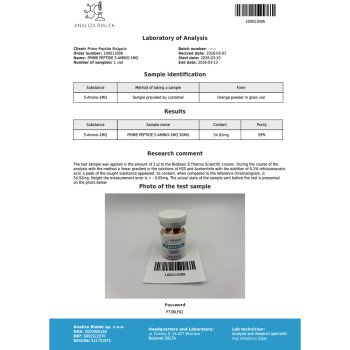
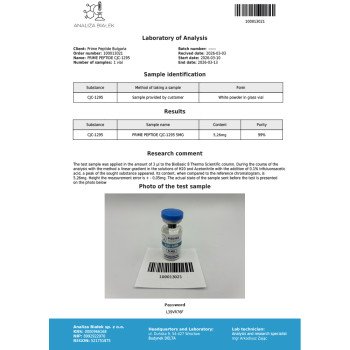
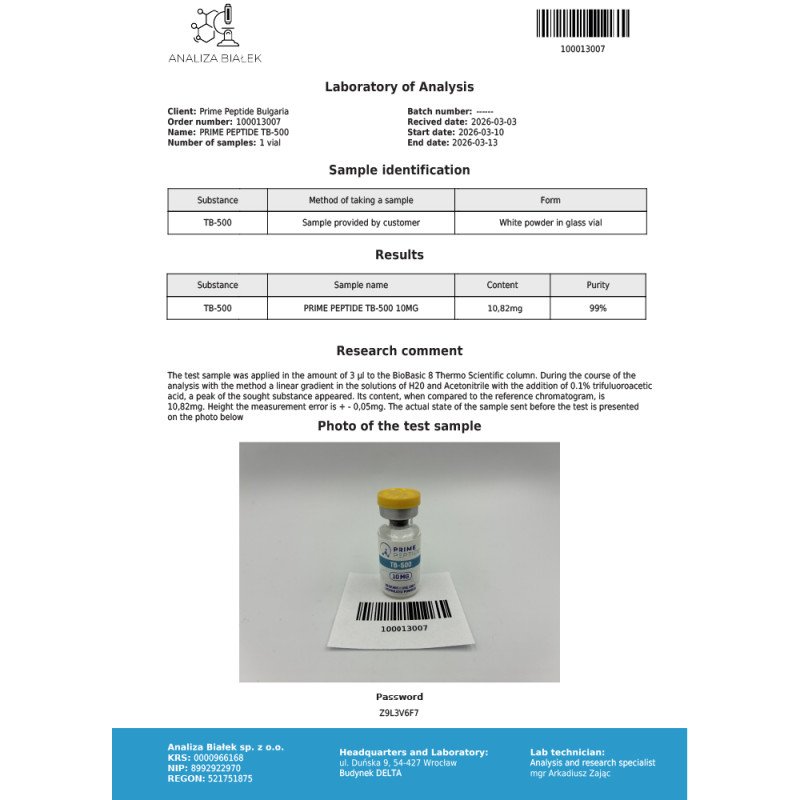
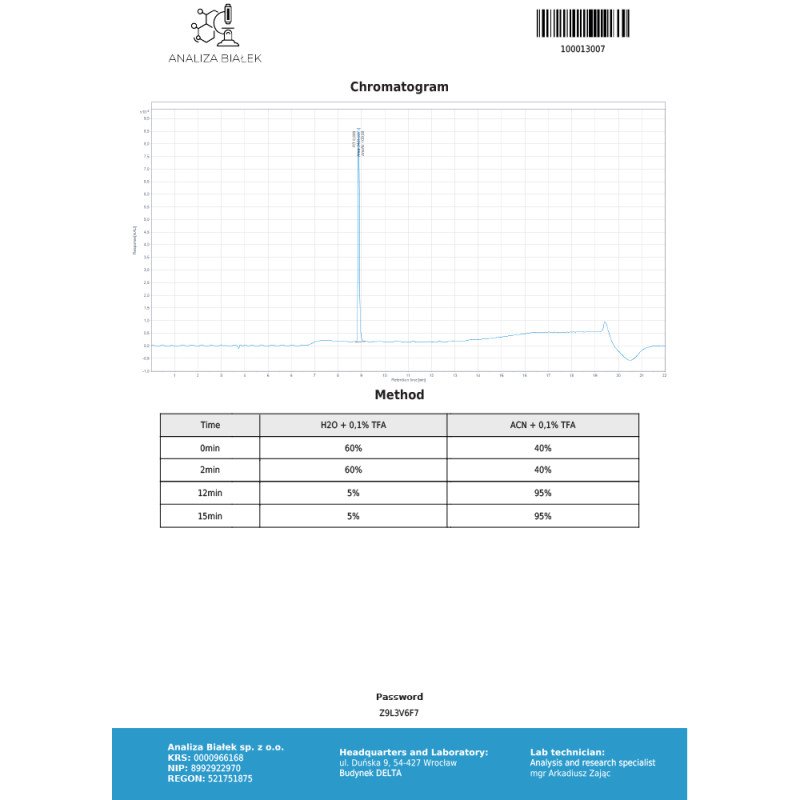
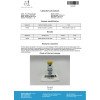
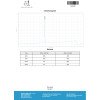
Check the authenticity of this certificate through the official website of the independent laboratory Analiza Bialek.