Sermorelin 5mg
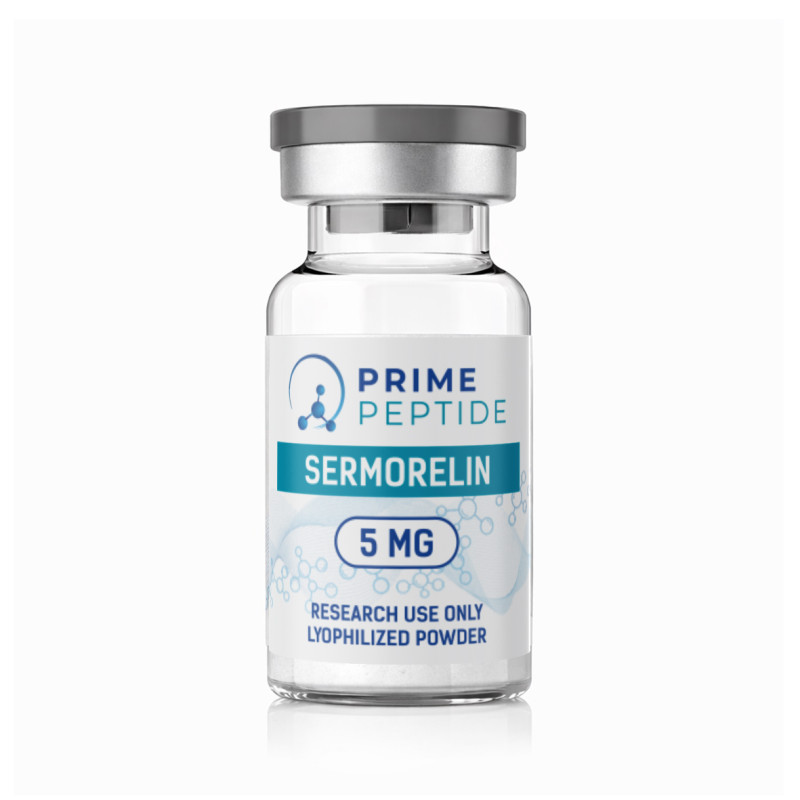
Sermorelin is a synthetic GHRH peptide that, in a research context, stimulates the natural release of growth hormone from the pituitary gland. It is used to support GH secretion, improve metabolism and maintain body composition.
What is Sermorelin?
Sermorelin is a synthetic peptide that is an analogue of GHRH (Growth Hormone Releasing Hormone) – the hormone that controls the release of growth hormone from the pituitary gland.
The peptide was developed as a more physiological approach to stimulating the GH axis, as it does not deliver growth hormone directly, but activates its own production. This makes it significantly closer to the body’s natural mechanisms.
Sermorelin represents the first 29 amino acids of GHRH – the part that carries the hormone’s full biological activity. Through this mechanism, it stimulates the pituitary gland to release growth hormone in a natural, pulsatile way.
Unlike direct growth hormone, which is administered from outside, Sermorelin stimulates the body’s own GH production while preserving natural regulation and the body’s physiological rhythm.
What are the benefits of Sermorelin?
Stimulation of natural growth hormone production
Sermorelin activates GHRH receptors in the pituitary gland, which leads to increased secretion of the body’s own GH, without direct external intervention.
Improving body composition
By increasing GH and IGF-1, the peptide supports fat reduction and the maintenance of lean muscle mass.
Improving recovery
It binds to better recovery of muscles and tissues, especially during physical exertion or when there is a deficit of recovery resources.
Improving sleep
Since growth hormone is released mainly during deep sleep, stimulating the GH axis may lead to higher-quality, restorative sleep.
Supporting metabolism
Sermorelin supports fat metabolism and energy balance through its indirect influence on GH and IGF-1.
Clinical trials on Sermorelin
Sermorelin was developed in the 1990s as a therapy for growth hormone deficiency in children and was approved by the FDA in 1997 under the trade name Geref. Later, its production was discontinued when direct recombinant growth hormone (hGH) began to be used more widely as a therapy, as it allows more precise dosing control and a stronger and more predictable therapeutic effect in patients with confirmed growth hormone deficiency.
Clinical studies show that the peptide effectively stimulates the release of growth hormone and leads to increased IGF-1, which is the main mediator of the effects of GH in the body.
In practice, Sermorelin is also used as a diagnostic tool to assess pituitary function, which further confirms its direct effect on the GH axis.
The observed results include:
- increased pulsatile secretion of GH
- increased levels of IGF-1
- preservation of the physiological regulation of the hormonal axis
- good tolerability in most patients
It is important to emphasise that Sermorelin works within the body’s natural mechanisms, which differentiates it from more aggressive hormonal approaches.
Correct intake and dosage of Sermorelin within a research protocol
The correct intake and dosage of Sermorelin may vary depending on the protocol’s objectives, but in research practice the most common doses are in the range of 200–300 mcg per day.
It is usually administered in the evening before sleep, as that is when the body naturally releases the highest amounts of growth hormone. This allows the peptide’s action to be synchronised with the natural biological rhythm of GH. This approach is key because it preserves the pulsatile secretion pattern and maximises the physiological effect.
The duration usually varies between 8 and 12 weeks, with a cyclic approach often used with planned breaks; afterwards, if necessary, the protocol can be repeated. This method helps maintain receptor sensitivity and the durability of the effect.
Possible side effects of Sermorelin
Sermorelin is considered a well-tolerated peptide, especially when used in moderate doses and within a controlled research protocol.
Most common side effects:
- redness at the injection site
- mild swelling
- headache
- dizziness
Less common reactions:
- nausea
- flushing of the face
- temporary changes in blood pressure
In most cases these reactions are mild and temporary, especially in the initial adaptation period.
Comparison of Sermorelin with other peptides
Sermorelin belongs to the group of GHRH analogues, which means it works by stimulating the pituitary gland to release growth hormone naturally. This places it clearly in a category compared with other peptides that either act via a different receptor mechanism or directly deliver the hormone.
Sermorelin vs hGH (Somatotropin)
hGH (Somatotropin) is a direct exogenous growth hormone that enters the body ready-made and bypasses natural regulation. Sermorelin, on the other hand, as a GHRH analogue does not deliver hormone from the outside, but activates the body’s own GH production, leading to a more physiological and controlled effect. The difference is fundamental: with hGH there is an external hormone; with Sermorelin there is stimulation of the body’s own system.
Sermorelin vs Ipamorelin
Ipamorelin is part of the GHRP secretagogues group and acts through ghrelin receptors (GHS-R1a), which is a completely different mechanism from GHRH. Sermorelin stimulates GH through GHRH receptors, while Ipamorelin works along a parallel pathway. That is why they are often combined for a stronger effect.
Sermorelin vs GHRP-2 and GHRP-6
GHRP-2 and GHRP-6 are also GHRP secretagogues and stimulate GH release via the ghrelin pathway. They typically lead to a stronger and faster GH peak, but they are also associated with additional effects such as increased appetite. Sermorelin is more balanced and closer to the body’s natural physiology.
Sermorelin vs CJC-1295 without DAC
Both peptides are GHRH analogues, but CJC-1295 without DAC is modified for a longer duration of action in the body. Sermorelin is shorter-acting and closer to natural GHRH, whereas CJC provides more prolonged stimulation of GH secretion.
Sermorelin vs CJC-1295 with DAC
CJC-1295 with DAC is a significantly longer-acting GHRH analogue, where DAC (Drug Affinity Complex) is a modification that allows the peptide to bind to plasma proteins and remain active in the body for an extended period. This results in maintained stable levels of GH stimulation over days, unlike Sermorelin, which works with shorter pulses and is closer to the natural rhythm of growth hormone release. That is why CJC-1295 with DAC provides a longer-lasting effect, but is less physiological as a model compared to pulsatile secretion.
Sermorelin vs Tesamorelin
Tesamorelin is also a GHRH analogue, but it is optimised for higher stability and a stronger effect on GH and IGF-1. Sermorelin is milder and closer to the natural hormone, while Tesamorelin provides a more pronounced and prolonged stimulation.
The information on this website is collected and summarised from multiple scientific studies and analyses.
It is purely for information and is not intended for the diagnosis, treatment or prevention of diseases.
The products offered on the site are not classified as medicines or medical devices and are suitable solely for laboratory and research purposes.


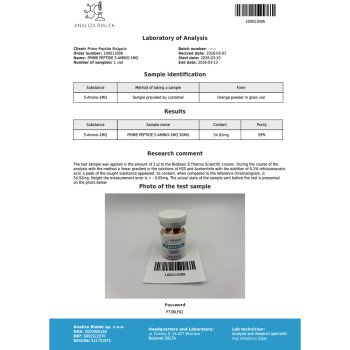
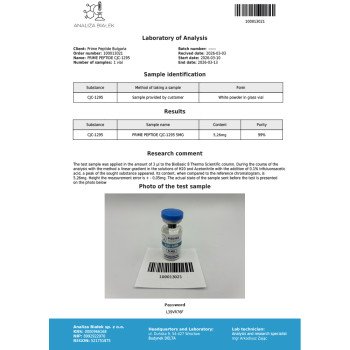
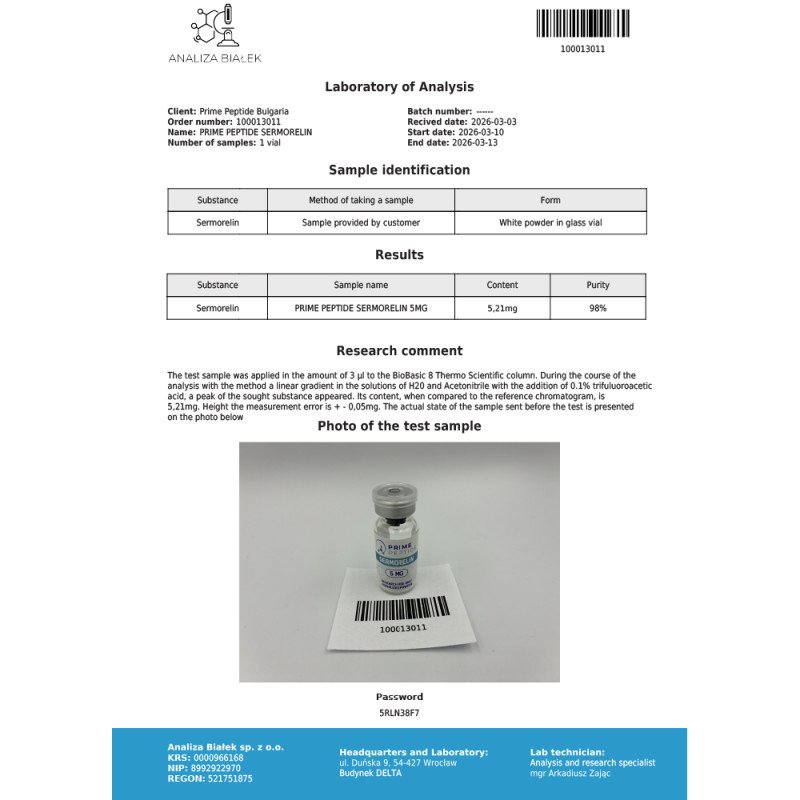
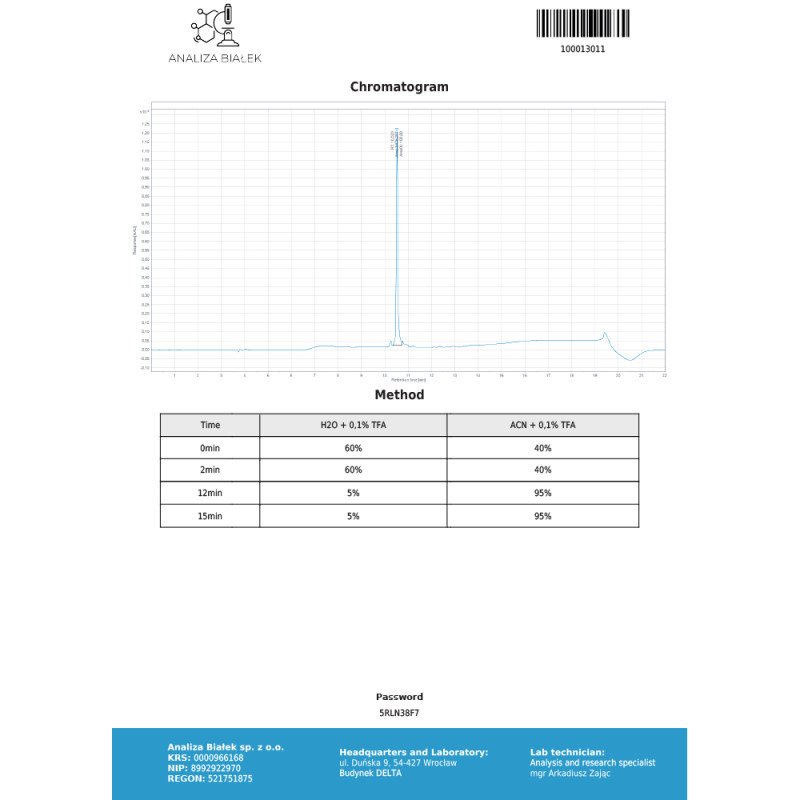
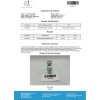
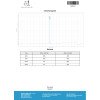
Check the authenticity of this certificate via the official website of the independent laboratory Analiza Bialek.