Growth Hormone (HGH) - Somatotropin (Somatotropin) 36iu
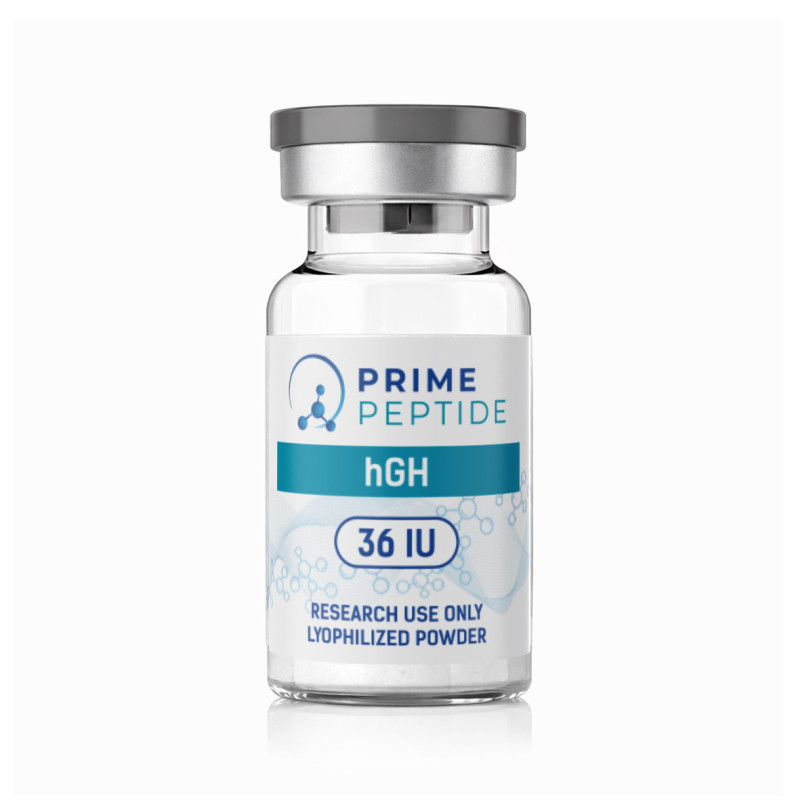
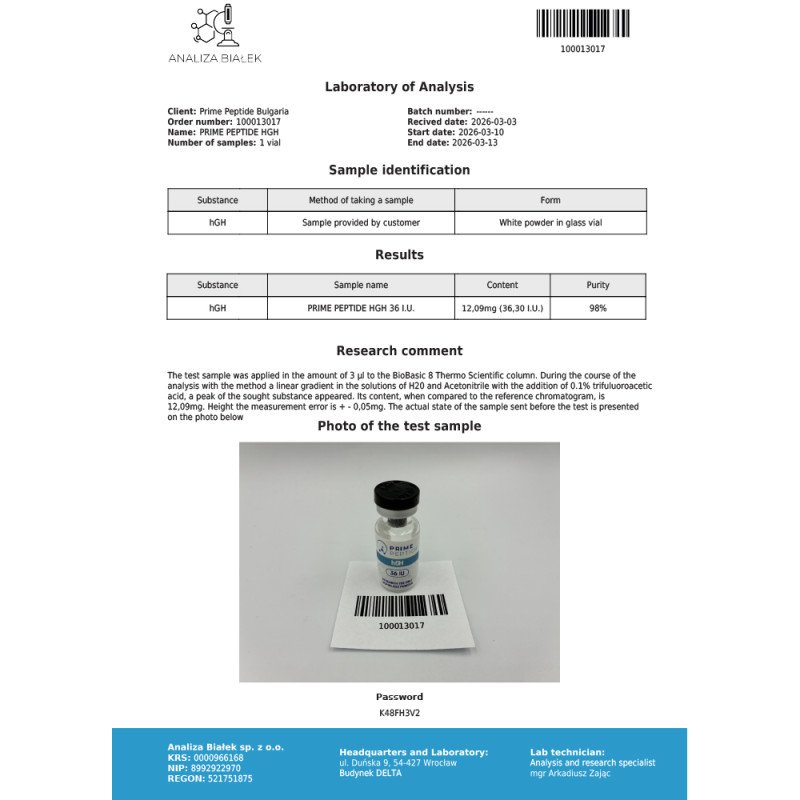
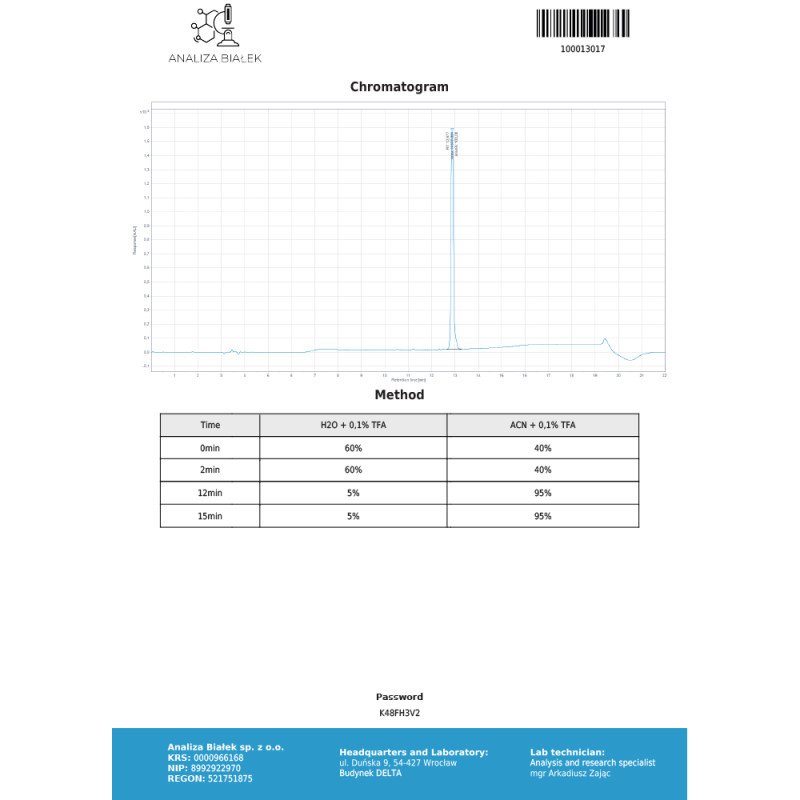
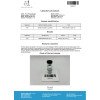

The product is not intended for human use and is offered solely for scientific research purposes. The information in the description has been compiled and summarised from multiple scientific studies and analyses and is purely for informational purposes.
What is Human Growth Hormone (hGH) /Somatotropin?
Human Growth Hormone (hGH), also known as somatotropin, is a peptide hormone that is naturally produced in the pituitary gland. It consists of 191 amino acids and is one of the most important regulators of growth and metabolic processes in the human body.
The main function of growth hormone is to stimulate cell growth, tissue regeneration, and protein synthesis. After it is released into the body, Somatotropin activates specific receptors in different tissues and stimulates the production of IGF-1 (Insulin-like Growth Factor-1), which is a key mediator of growth and anabolic processes.
Through this mechanism, growth hormone is involved in a number of physiological processes such as the development of muscle tissue, maintaining bone density, regulating fat metabolism, and cellular repair.
The levels of growth hormone are highest in childhood and adolescence, when the body is actively developing. As age increases, growth hormone production gradually decreases; this is a process known as somatopause, which is often associated with changes in body composition, slower recovery processes, and reduced muscle mass.
Modern recombinant growth hormone (somatotropin) is produced through recombinant DNA biotechnology, which allows the synthesis of a molecule identical to natural human growth hormone.
What are the benefits of Growth Hormone (HGH) - Somatotropin (Somatotropin)?
Based on scientific research, growth hormone is considered a key regulator of multiple processes related to growth, tissue recovery, and metabolism.
Improving body composition
Growth hormone stimulates lipolysis – the process of breaking down fat cells – and supports the use of fats as an energy source. This can lead to a reduction in body fat and improved overall body composition.
Muscle growth
Growth hormone stimulates protein synthesis and cell division, which supports the development of muscle tissue and increases lean muscle mass.
Faster recovery
Somatotropin plays an important role in the regeneration of muscles, tendons, joints, and connective tissue. For this reason, it is the subject of serious interest in research on recovery after physical exertion.
Improving bone density
By stimulating the IGF-1 signalling pathway, growth hormone supports the maintenance of bone mineral density and the strength of bone tissue.
Supporting metabolism
Growth hormone affects the metabolism of fats, carbohydrates and proteins, contributing to the regulation of the body’s energy balance.
Potential anti-ageing effect
By stimulating cellular regeneration and collagen production, growth hormone is considered an important factor in research related to ageing and maintaining vitality.
Clinical trials on Growth Hormone (HGH) - Somatotropin (Somatotropin)
Human Growth Hormone is one of the most well-studied hormones in modern medicine and endocrinology. Over the past decades, numerous clinical studies have been conducted to analyse its effects on growth, metabolism, and tissue regeneration.
In medical practice, recombinant growth hormone is used for conditions related to growth hormone deficiency, as well as for some growth disorders.
Scientific research also examines the role of hGH in regulating body composition, tissue recovery, and metabolic processes.
Due to its complex effects on cellular signalling and the IGF-1 system, growth hormone remains an object of significant scientific interest in areas such as regenerative medicine, metabolic research, and human physiology.
Proper use and dosage of Growth Hormone (HGH) - Somatotropin (Somatotropin)
Human Growth Hormone is usually administered via subcutaneous injection.
The exact dosage and administration schedule may vary significantly depending on the research protocol used, age, metabolic status, and the set goals.
Several main administration schedules are used in scientific and research protocols.
- Daily protocol:
One of the most commonly used regimens involves daily administration of growth hormone with the aim of maintaining more stable hormone levels in the body.
Typical research dosages:
1 – 2 IU per day
- Protocol every other day:
In some studies, an every-other-day administration schedule is used. This approach allows for a larger interval between individual injections.
Typical research dosages:
2 – 3 IU every other day
- "5 days on / 2 days off" protocol
Another frequently used research approach is the cyclical protocol, in which hGH is administered for five consecutive days, followed by two days of rest.
Typical doses for this protocol:
1 – 2 IU per day within 5 days, followed by a 2-day pause.
Time of administration:
hGH can be administered both in the morning and in the evening, depending on the specific goals and the protocol used.
Some protocols use morning administration when the aim is to stimulate lipolysis and fat metabolism.
Other protocols prefer evening administration, as the body’s natural release of growth hormone is highest during the deep phases of sleep.
In both cases, however, there is a very important principle that is followed in most research protocols.
The injection is usually given about 2 hours before or 2 hours after meals, especially if the food contains carbohydrates.
The reason for this is related to the effect of insulin on the action of growth hormone. After eating, especially a carbohydrate-rich meal, insulin levels in the body increase. Increased insulin may suppress some of the metabolic effects of growth hormone, particularly those related to lipolysis – the breakdown of fat cells.
When hGH is administered at lower insulin levels (for example, on an empty stomach or between meals), its lipolytic effect may be more pronounced.
For this reason, many research protocols recommend administering hGH far from food intake, especially carbohydrates.
The duration of administration may vary depending on the aims of the study.
Possible side effects of Growth Hormone
As with most bioactive compounds when administering hGH peptide, some unwanted reactions may be observed.
Most common side effects:
- fluid retention
- slight swelling
- joint pain
Less common reactions:
- headache
- temporary tiredness
- slight increase in blood sugar
In most cases, these reactions are mild and are observed mainly at higher doses.
The information on this website has been compiled and summarised from multiple scientific studies and analyses.
It is entirely for informational purposes and is not intended for the diagnosis, treatment, or prevention of diseases.
The products offered on the site are not classified as medicines or medical devices and are suitable solely for laboratory and scientific research purposes.