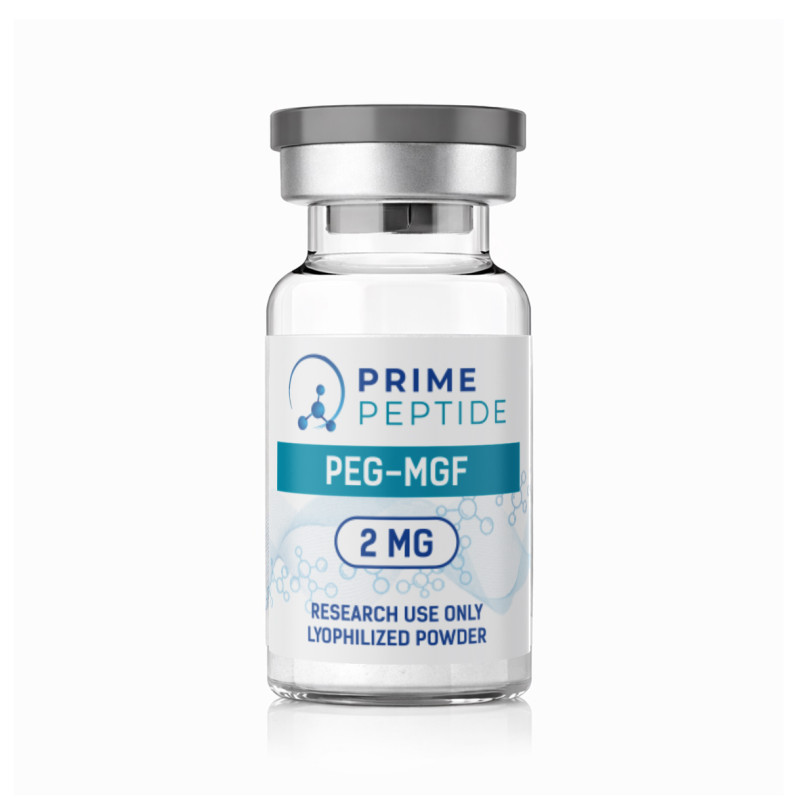
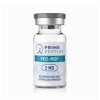
PEG-MGF 2mg
This offer ends in:
PEG-MGF is a modified peptide aimed at muscle regeneration and recovery after exertion, which works directly at the level of muscle tissue by activating the processes of cellular recovery and adaptation.
What is PEG-MGF?
PEG-MGF is a synthetic, stabilised form of Mechano Growth Factor (MGF) – a local variant of IGF-1, which is released in the muscles in response to mechanical stress, training or microtrauma.
MGF is one of the key signals that triggers the process of muscle recovery. It activates so-called satellite cells – muscle stem cells that directly contribute to repairing damaged fibres and adapting the muscle to load.
The issue with natural MGF is that it has an extremely short lifespan in the body. This is where PEG-MGF comes in.
PEG-MGF is created through a PEGylation process – adding polyethylene glycol (PEG) to the molecule, which significantly increases its stability and extends the duration of its action. This allows the peptide to remain active for longer and exert a stronger, more sustained effect on muscle tissue.
In practice, this makes it a more effective tool in research focused on muscle regeneration, recovery and adaptation.
What are the benefits of PEG-MGF?
PEG-MGF is considered one of the key peptides for local muscle regeneration, especially in the context of physical exertion and recovery.
Supporting muscle regeneration
The peptide activates satellite cells, which directly participate in the recovery and building of muscle fibres after damage.
Improving recovery after physical exertion
It helps speed up recovery after intensive training, supporting the adaptation of muscle tissue to load.
Potential support for muscle growth
By stimulating regenerative processes, PEG-MGF creates conditions for the development of muscle mass, especially when combined with a mechanical stimulus.
Longer-lasting action
Thanks to the PEG modification, the peptide remains active significantly longer than standard MGF, leading to a more sustained effect.
Local action on muscle tissue
Unlike systemic factors such as IGF-1, MGF works locally where damage occurs, which makes it more targeted to the actual recovery process.
Clinical trials on PEG-MGF
A large portion of the scientific data is related to natural MGF and its role in muscle adaptation.
Studies show that MGF:
- activates muscle stem cells
- is involved in the repair of muscle fibres
- supports adaptation to mechanical load
- plays a key role in the early phases of muscle recovery
PEG-MGF has been developed as a more stable version of this mechanism, with the aim of extending and strengthening the effect.
It is important to note that PEG-MGF remains mainly in the research phase, with direct clinical data in humans being limited, but its mechanism of action is well substantiated.
Proper intake and dosage of PEG-MGF within a research protocol
In research protocols, PEG-MGF is typically used in the range of 200 – 400 mcg, administered 2–3 times per week.
Because of its extended duration of action, daily administration is not necessary, which distinguishes it from other peptides with a short half-life.
The length of cycles usually ranges between 4 and 8 weeks, with a break of 3–4 weeks planned between each individual cycle. This allows the sensitivity of cellular mechanisms to be maintained and helps avoid adaptation.
Possible side effects from PEG-MGF
PEG-MGF is generally considered a well-tolerated peptide under research conditions.
Most common side effects
- redness at the injection site
- mild swelling
- headache
- temporary fatigue
Less common reactions
- dizziness
- muscle sensitivity
- local discomfort
In most cases, these reactions are mild and short-lived, especially at the beginning of the protocol.
Comparing PEG-MGF with other peptides
PEG-MGF occupies a specific niche because it works directly at the level of muscle tissue, rather than through systemic hormonal stimulation.
PEG-MGF vs IGF-1 LR3
IGF-1 LR3 acts systemically and affects the whole body, whereas PEG-MGF is more local and is activated mainly in the areas of load. IGF-1 is stronger as an overall anabolic effect, but PEG-MGF is more focused on real regeneration.
PEG-MGF vs TB-500
TB-500 is a peptide with a broad regenerative effect on various tissues, including tendons and ligaments. PEG-MGF is more specific for muscles and works directly on muscle adaptation.
PEG-MGF vs BPC-157
BPC-157 is targeted at tissue recovery and anti-inflammatory processes, while PEG-MGF is more narrowly focused on muscle regeneration and cellular growth.
Information on this website is collected and summarised from multiple scientific studies and analyses.
It is purely for informational purposes and is not intended for diagnosing, treating or preventing diseases.
The products offered on the site are not classified as medicines or medical devices and are intended solely for laboratory and research purposes.


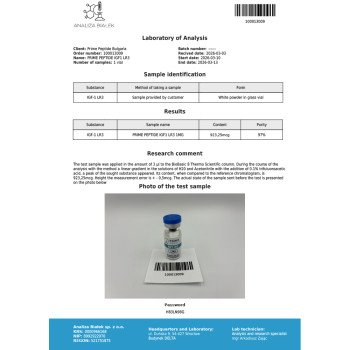
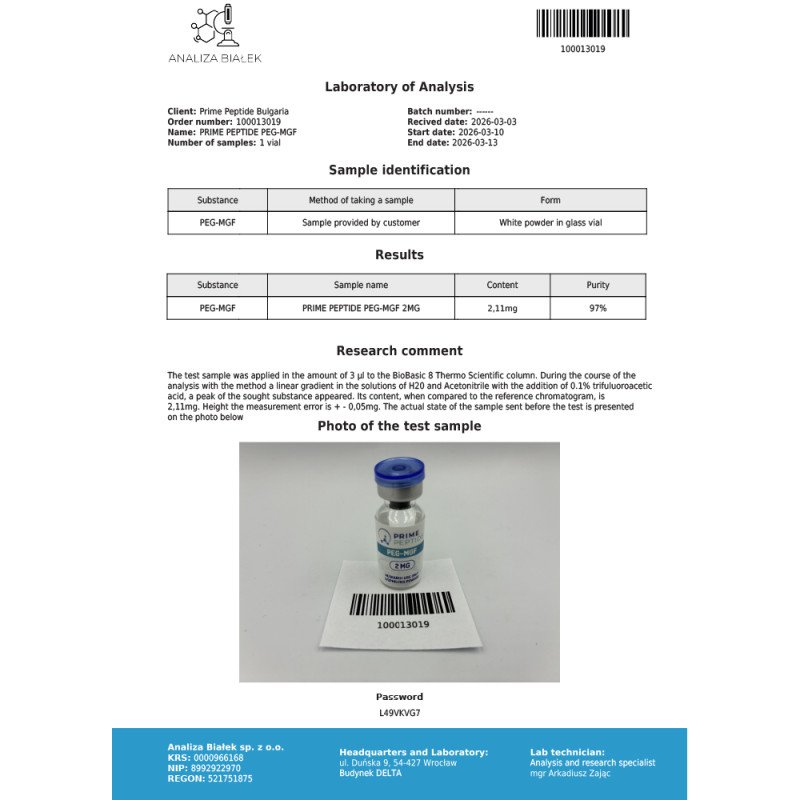
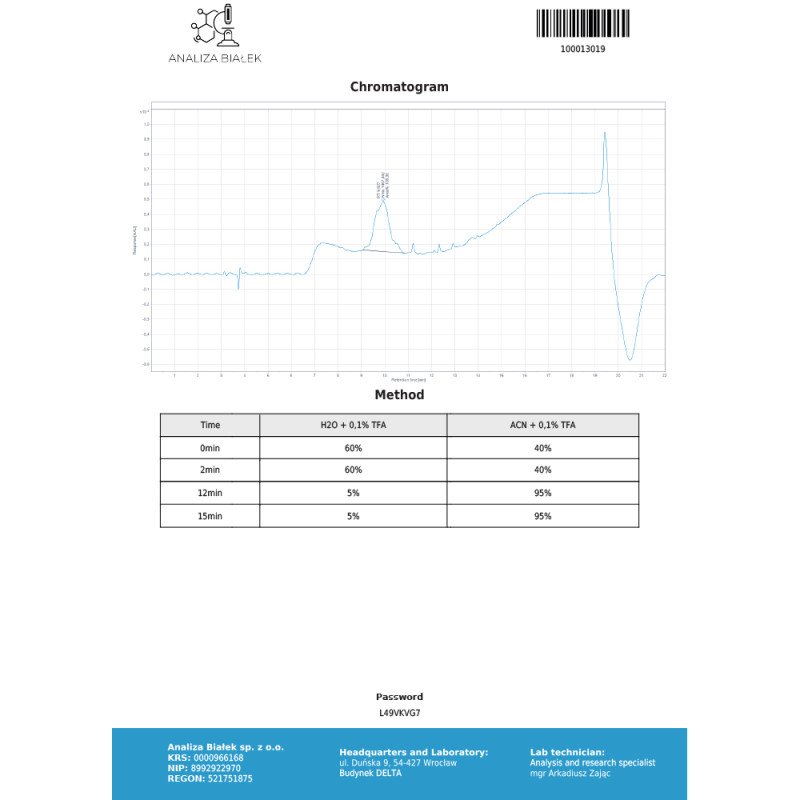
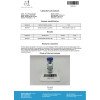
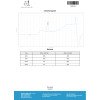
Check the authenticity of this certificate via the official website of the independent laboratory Analiza Bialek.