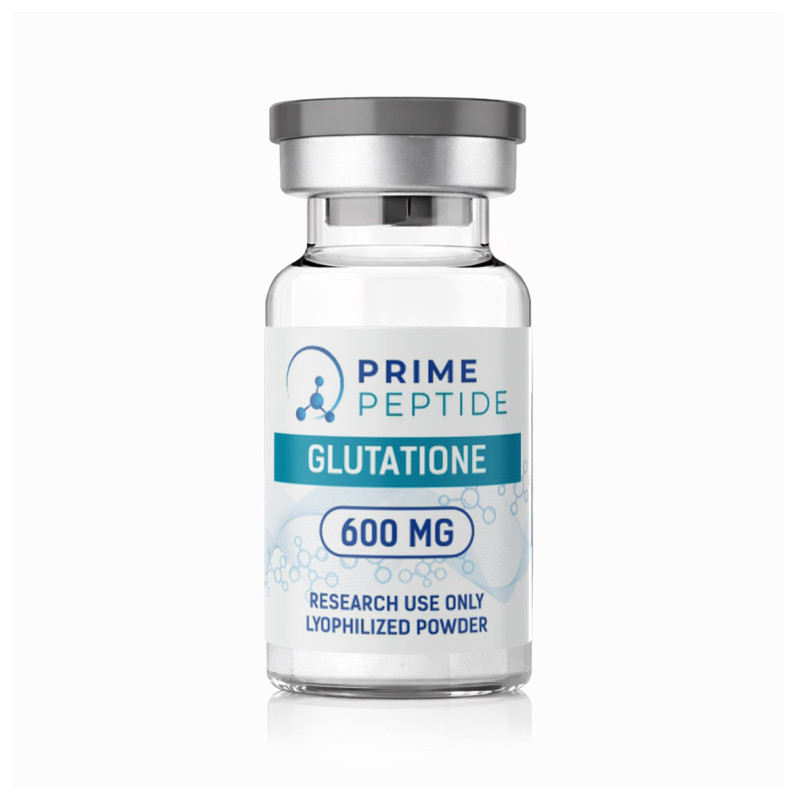
Glutathione (Glutathione) 600mg
🧪 Peptide Calculator
What is the total capacity of your syringe?
What is the amount of peptide in the vial?
How much bacteriostatic water will you add?
What is the dose?
What is Glutathione?
Glutathione (Glutathione, GSH) is a natural tripeptide, made up of three amino acids – glutamate, cysteine and glycine. It is naturally synthesised in the human body and is one of the main intracellular antioxidants.
Glutathione plays a key role in protecting cells from oxidative stress and reactive oxygen species (ROS). It is involved in maintaining the cellular redox balance and works together with a number of antioxidant enzyme systems.
Particularly high concentrations of glutathione are found in the liver – an organ with a central role in metabolism and inactivating various chemical compounds. GSH acts as a cofactor and substrate in processes through which certain reactive molecules are converted into forms that the body can eliminate more easily.
Glutathione exists mainly in two forms – reduced glutathione (GSH) and oxidised glutathione (GSSG). The ratio between them is used in scientific research as an indicator of the cellular oxidative status.
In addition to its antioxidant function, GSH is involved in many biological processes, including cell signalling, immune function, xenobiotic metabolism, regeneration of other antioxidants and maintaining normal mitochondrial function.
With age and under different forms of physiological and oxidative stress, glutathione levels can change. This is one of the reasons why the molecule is of serious interest in research into ageing, metabolic health and cellular protection.
Glutathione is also studied in dermatology due to its link with melanogenesis and skin pigmentation.
What are the benefits of Glutathione?
Powerful antioxidant protection
Glutathione directly contributes to neutralising reactive oxygen compounds and protecting cellular structures from oxidative damage.
Supporting liver processes
GSH plays an important role in Phase II of biotransformation and in the conjugation of various reactive compounds in the liver.
Supporting cellular protection
Glutathione helps protect proteins, lipids and other cellular components from oxidative stress.
Supporting the immune system
Normal levels of glutathione are important for the function and regulation of various cells of the immune system.
Supporting mitochondrial function
Mitochondrial glutathione helps protect mitochondria from reactive oxygen species generated during cellular energy production.
Regeneration of other antioxidants
Glutathione is involved in an antioxidant network together with vitamin C, vitamin E and various enzyme systems.
Anti-ageing research
Changes in GSH levels and the redox balance are studied in relation to ageing and the accumulation of oxidative cellular damage.
Skin and pigmentation
Glutathione is studied for its potential influence on melanin synthesis and various processes related to skin pigmentation.
Recovery after oxidative stress
Due to its central role in the antioxidant system, GSH is of interest in models of increased physiological and cellular stress.
Clinical trials on Glutathione
Glutathione is significantly better studied than many experimental peptides. There are numerous laboratory and clinical studies on its role in antioxidant protection, liver function, oxidative stress and various pathological processes.
Particularly well established is the biochemical function of the system GSH/GSSG as one of the main mechanisms for maintaining the cellular redox balance.
Intravenous glutathione has also been studied in humans in different clinical contexts. Published studies examine its effects on oxidative stress and glutathione levels in the body.
A separate area is dermatological research. Oral, topical and parenteral glutathione have been studied for their potential influence on skin pigmentation. Some studies report changes in the melanin index, but the evidence is limited and the results do not establish a universal or approved therapy for skin lightening.
The glutathione system is also studied in relation to ageing, metabolic disorders, neurodegenerative processes and various conditions in which oxidative stress may play a role.
Correct intake and dosage of Glutathione
The amount of glutathione used in scientific research varies significantly depending on the method of administration and the specific research objective.
In different parenteral and experimental protocols, amounts are found approximately in the range of:
200–600 mg – a low to moderate experimental range;
600–1200 mg – a frequently encountered higher research range;
1200–2000 mg and more – used in certain controlled clinical protocols according to the specific research objective.
In some clinical models, the amount is also determined based on body weight rather than as a fixed dose.
The frequency of administration also varies significantly – from a single exposure to repeated administrations within a few weeks.
All the amounts stated are experimental and derived from different research and clinical protocols. They do not represent a universal recommendation for use or an individual medical dosage.
Possible side effects of Glutathione
The profile of adverse reactions depends on the route of administration, the amount and individual sensitivity.
In various studies, the following have been reported:
nausea;
abdominal discomfort;
headache;
dizziness;
skin reactions;
reactions at the site of administration;
allergic reactions.
Comparing Glutathione with other peptides and research compounds
Glutathione vs NAD+
NAD+ is not a key cellular coenzyme, involved in energy production, redox reactions and the function of various enzymes. Glutathione has a more direct role in antioxidant protection and maintaining the cellular redox balance.
Glutathione vs GHK-Cu
GHK-Cu is a copper tripeptide studied mainly in relation to skin, collagen and regeneration. Glutathione is also a tripeptide, but it has a completely different structure and its main biological function is associated with the antioxidant system.
Glutathione vs MOTS-C
MOTS-C is a mitochondrially encoded peptide studied in relation to energy and glucose metabolism. Glutathione has a more direct role in protecting mitochondria and cells from oxidative stress.
Glutathione vs AICAR
AICAR is an experimental AMPK activator used to study cellular energy metabolism. Glutathione does not activate AMPK via this mechanism, but primarily functions as part of the cellular antioxidant and redox system.
The information on this website has been collected and summarised from multiple scientific studies and analyses.
It is purely for informational purposes and is not intended for diagnosing, treating or preventing diseases.
The products offered on the site are not classified as medicines or medical devices and are suitable solely for laboratory and research purposes.
0% Customers recommend this product
- 5 Awesome0%
- 4 Great0%
- 3 Average0%
- 2 Bad0%
- 1 Poor0%
Reviews Over Glutathione 600mg
- (0)
Total Reviews (0)
click here write review to add review for this product.