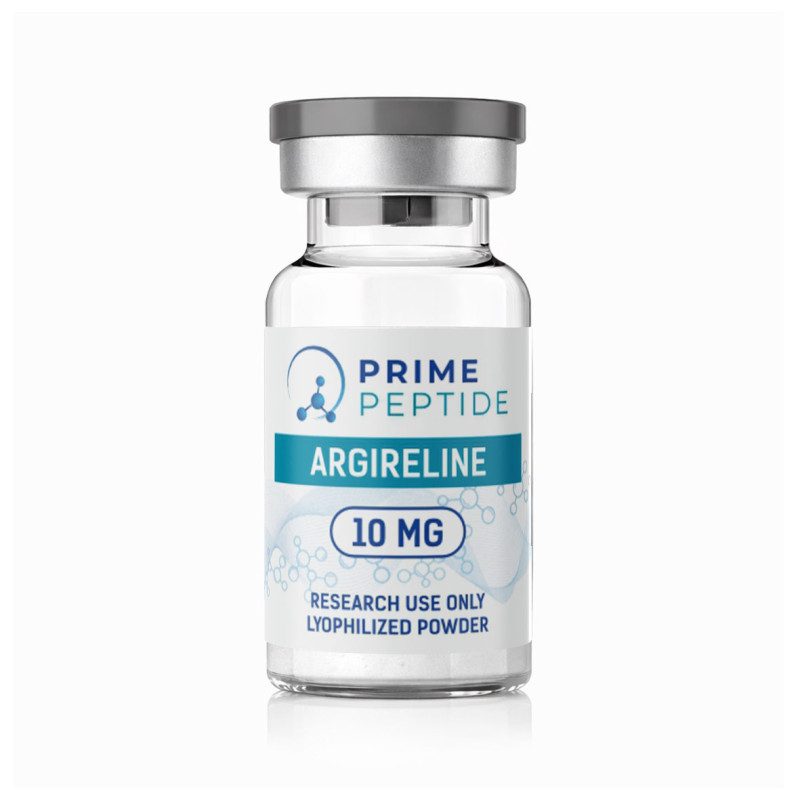
Argireline (Argirelin) 10mg
🧪 Peptide Calculator
What is the total capacity of your syringe?
What is the amount of peptide in the vial?
How much bacteriostatic water will you add?
What is the dose?
What is Argireline?
Argireline, also known as Acetyl Hexapeptide-8 or Acetyl Hexapeptide-3, is a synthetic peptide made up of six amino acids. It was developed and is researched primarily in the field of anti-aging care, expression lines and the mechanisms that regulate muscle contraction in the skin.
Argireline is a fragment associated with SNAP-25 – a protein involved in the SNARE complex and the release of neurotransmitters. It is this mechanism that forms the basis of scientific interest in the peptide.
Argireline may influence the formation of the SNARE complex and, in this way, modulate the release of acetylcholine. The result, studied in topical models, is a reduction in the intensity of the muscle contractions that contribute to the formation of dynamic expression lines.
Because of this mechanism, Argireline is often referred to as “Botox-like peptide”, although this definition is conditional. It is not botulinum toxin, and its mechanism, strength and mode of action differ significantly from those of botulinum toxin.
The main scientific interest is focused on the areas where repeated facial movements contribute to the formation of lines – around the eyes, the forehead and between the brows.
In addition to effects on the expression muscles, Argireline is also studied as a component of cosmetic and dermatological formulations aimed at improving the appearance and smoothness of the skin.
Argireline is among the most popular cosmetic peptides and is present as an active ingredient in multiple anti-aging formulations.
What are the benefits of Argireline?
Reducing expression lines
Argireline is researched primarily for its potential to reduce the visibility of dynamic lines caused by repeated facial movements.
Anti-aging effect
The peptide is of interest in studies and formulations targeting signs of skin ageing.
Influence on neuromuscular signalling
Argireline interacts with mechanisms associated with the SNARE complex and the release of acetylcholine.
Improving skin smoothness
In topical experimental and cosmetic models, its potential to improve the visual smoothness of the skin is being studied.
Support for lines around the eyes
The area around the eyes is one of the main areas in which Argireline has been studied due to frequent expression movements.
Support for forehead lines
The peptide is of interest for research into dynamic lines that form as a result of repeated contractions of the facial muscles.
Non-invasive research approach
Argireline is studied primarily as a molecule applicable topically, which sets it apart from invasive approaches to modulating the expression muscles.
Combining with other cosmetic peptides
Argireline is often studied in combination with copper peptides and other signalling peptides when developing complex anti-aging formulations.
Clinical trials of Argireline
Argireline has been studied both in laboratory models and in a limited number of studies in humans, focusing mainly on its effect on expression lines.
One of the main mechanisms studied in Acetyl Hexapeptide-8 is its ability to interact with processes involved in the formation of the SNARE complex. This complex plays a key role in the release of neurotransmitters and the subsequent muscle contraction.
In clinical and cosmetic studies, topical formulations with Argireline have been evaluated for changes in the depth and visibility of wrinkles, especially in the area around the eyes.
Some of the published results show a measurable reduction in the visibility of expression lines after prolonged topical application.
However, there are significant differences between individual studies with regard to concentration, the formula, the method of delivery through the skin and the assessment methods used.
Therefore, Argireline should not be viewed as a direct equivalent of botulinum toxin, but as a separate peptide approach studied for modulating the processes associated with the skin’s dynamic lines.
Proper use and dosage of Argireline
There is no standard systemic or injectable therapeutic dosage for Argireline. Scientific and cosmetic studies are focused primarily on topical formulations.
Topical experimental protocols typically consider application once or twice daily for a period of approximately 4–8 weeks, after which changes in specific skin parameters are assessed.
Possible side effects from Argireline
With topical formulations, Argireline is generally described as well tolerated, but the individual response also depends on the other components of the formulation used.
Potentially, the following may be observed:
slight redness;
skin irritation;
dryness;
itching;
sensitivity to the formula;
temporary local discomfort.
Data on systemic or injectable exposure are insufficient, and the long-term safety profile for this type of application has not been established.
Comparison of Argireline with other peptides
Argireline vs GHK-Cu
GHK-Cu is a copper tripeptide studied primarily in connection with collagen, skin, tissue regeneration and anti-aging processes. Argireline works through a different mechanism, targeted primarily at neuromuscular signalling and dynamic expression lines.
Argireline vs AHK-Cu
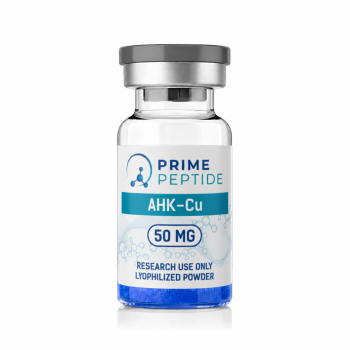
AHK-Cu is a copper tripeptide, of interest mainly in research on hair follicles, skin and fibroblast activity. Argireline has a more specific profile, aimed at the mechanisms associated with expression lines.
Argireline vs BPC-157
BPC-157 is studied mainly for the regeneration and restoration of various tissues. Argireline is significantly more specialised for cosmetic anti-aging applications and neuromuscular mechanisms in the skin.
Argireline vs KPV
KPV is a tripeptide with a research profile focused primarily on inflammatory mechanisms and the skin and gut barrier. Argireline stands out with its focus on dynamic lines and the processes related to its facial muscle contractions.
The information on this website has been collected and summarised from multiple scientific studies and analyses.
It is purely for informational purposes and is not intended for diagnosing, treating or preventing diseases.
The products offered on the site are not classified as medicines or medical devices and are suitable only for laboratory and research purposes.
0% Customers recommend this product
- 5 Awesome0%
- 4 Great0%
- 3 Average0%
- 2 Bad0%
- 1 Poor0%
Reviews Over Argireline (Argirelin) 10mg
- (0)
Total Reviews (0)
click here write review to add review for this product.